



MSK1 Kinase Enzyme Activity Assay Kit
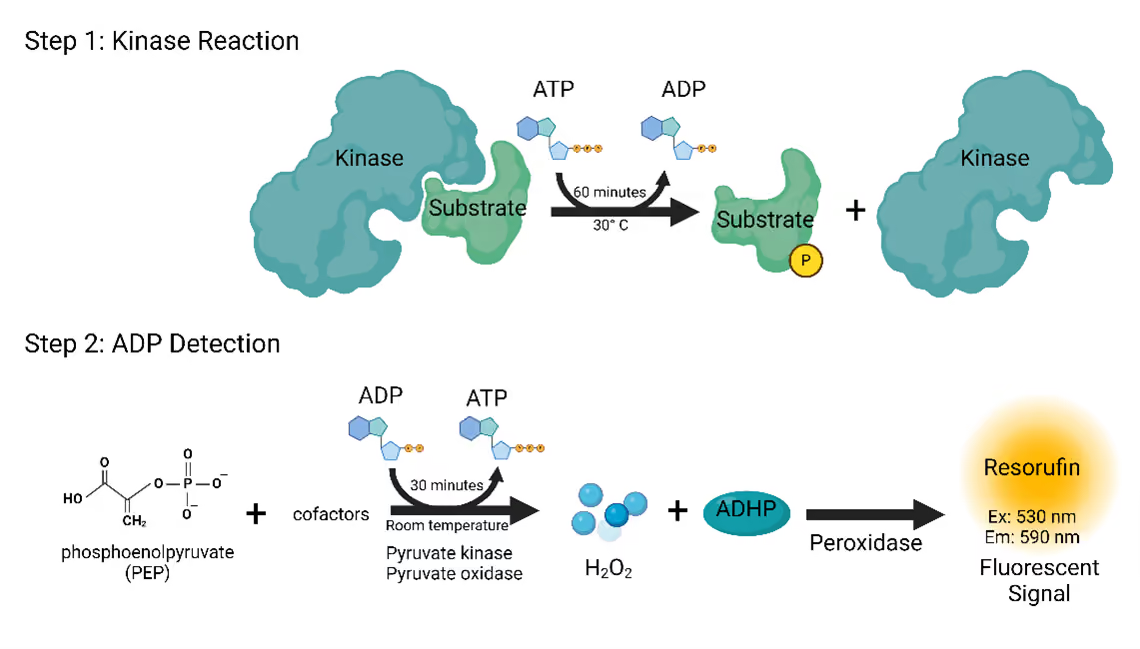
The MSK1 Kinase Enzyme Activity Assay Kit offers a validated, ready-to-use biochemical assay based on the renowned ADP Hunter™ Plus Assay platform from DiscoverX for accurately measuring kinase inhibitor efficacy. The kit includes recombinant MSK1, substrate, ATP, detection reagents, and assay plates, enabling precise quantification of ADP accumulation. Designed to handle elevated ATP concentrations, this assay delivers robust, reliable data ideal for high-throughput screening (HTS) and other drug discovery applications.
Biological information
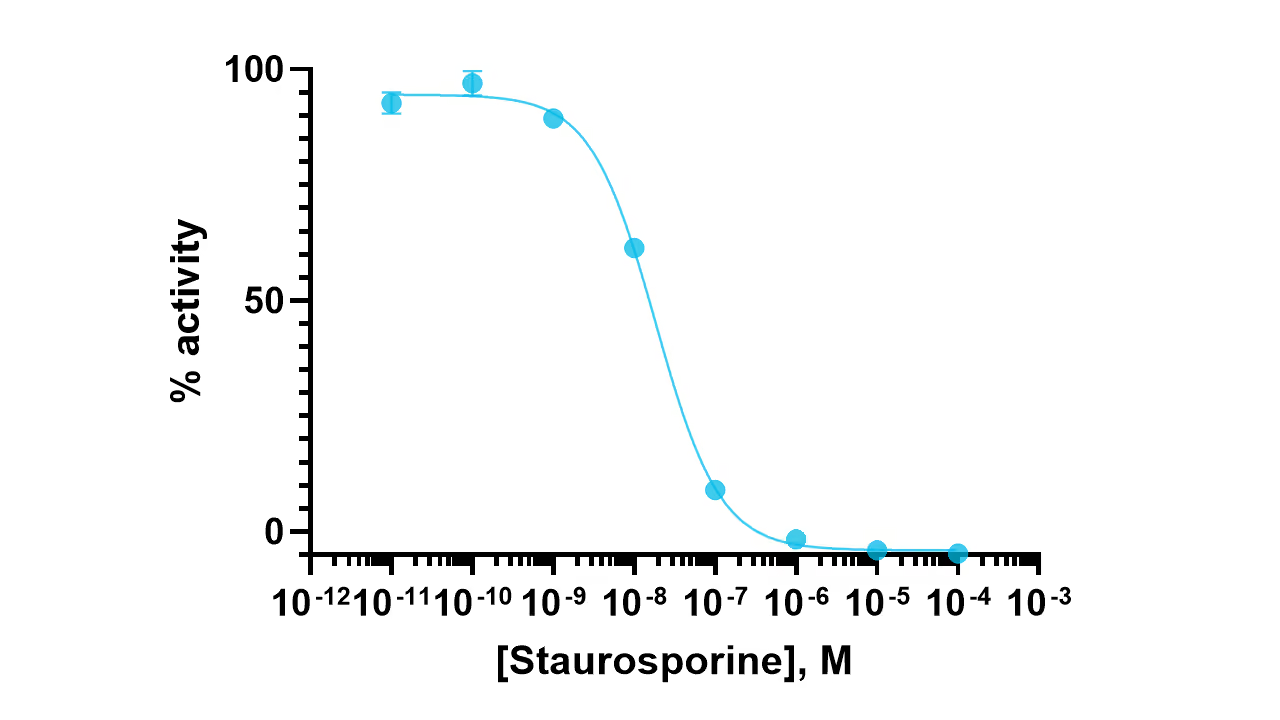
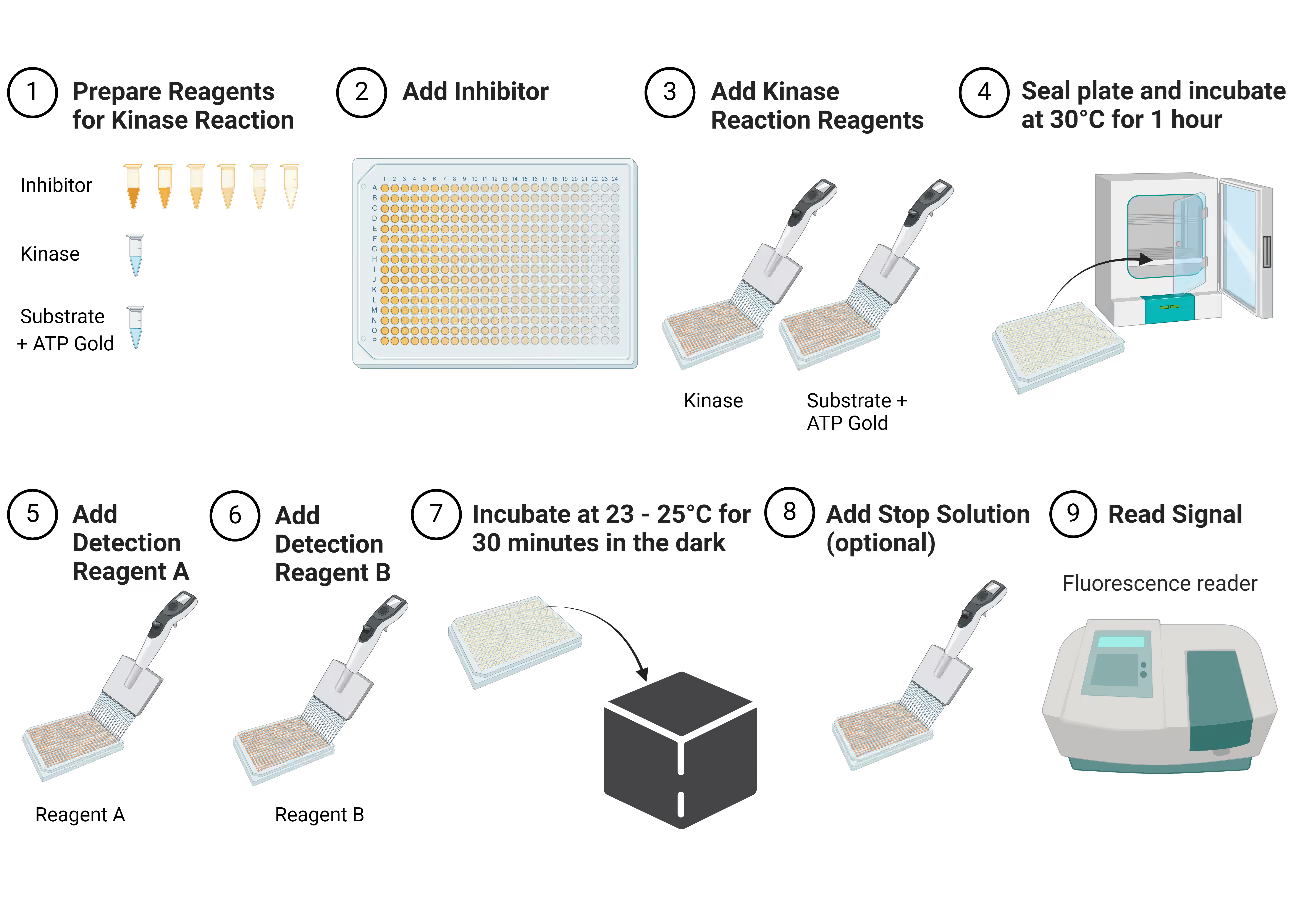
The Kinase Enzyme Activity Assay Kit provides a reliable biochemical method for evaluating kinase inhibitors. Built on HitHunter® assay technology, this kit is specifically optimized for MSK1. It comes with all essential components, including recombinant MSK1 (Eurofins #14-438), a substrate, ATP, detection reagents, and assay plates. Each kit is accompanied by a Certificate of Analysis (COA), which outlines the recommended reaction conditions for accurate inhibitor detection. The supplied materials are sufficient to perform experiments covering two, six or twenty five 384-well assay plates.
MSK1 belongs to the MAPK-activated protein kinase family and is activated downstream of extracellular signal-regulated kinases 1/2 (ERK1/2) and p38 MAPKs in response to mitogenic stimulation or cellular stress. A range of transcriptional regulators, including cAMP-response element-binding protein (CREB), activating transcription factor-1 (ATF-1), and the p65 (RelA) subunit of nuclear factor-κB (NF-kappaB), have been identified as MSK1 substrates. Phosphorylation of these factors by MSK1 modulates their transcriptional activity by influencing DNA-binding capacity and/or the recruitment of transcriptional co-activators. MSK1 also modulates gene transcription by phosphorylating chromatin-associated substrates, including histone H3 and high-mobility group nucleosome-binding domain protein 1 (HMGN1).
MSK1 has context-dependent roles in cancer: in colorectal cancer for example, MSK1 activity promotes epithelial–mesenchymal transition (EMT) and metastasis, whereas in some breast cancers, MSK1 supports luminal differentiation and metastatic dormancy. These dual roles underscore the need for disease- and context-specific therapeutic strategies.
Product specifications
Chemical data
The Kinase Enzyme Activity Assay Kit provides a reliable biochemical method for evaluating kinase inhibitors. Built on HitHunter® assay technology, this kit is specifically optimized for MSK1. It comes with all essential components, including recombinant MSK1 (Eurofins #14-438), a substrate, ATP, detection reagents, and assay plates. Each kit is accompanied by a Certificate of Analysis (COA), which outlines the recommended reaction conditions for accurate inhibitor detection. The supplied materials are sufficient to perform experiments covering two, six or twenty five 384-well assay plates.
MSK1 belongs to the MAPK-activated protein kinase family and is activated downstream of extracellular signal-regulated kinases 1/2 (ERK1/2) and p38 MAPKs in response to mitogenic stimulation or cellular stress. A range of transcriptional regulators, including cAMP-response element-binding protein (CREB), activating transcription factor-1 (ATF-1), and the p65 (RelA) subunit of nuclear factor-κB (NF-kappaB), have been identified as MSK1 substrates. Phosphorylation of these factors by MSK1 modulates their transcriptional activity by influencing DNA-binding capacity and/or the recruitment of transcriptional co-activators. MSK1 also modulates gene transcription by phosphorylating chromatin-associated substrates, including histone H3 and high-mobility group nucleosome-binding domain protein 1 (HMGN1).
MSK1 has context-dependent roles in cancer: in colorectal cancer for example, MSK1 activity promotes epithelial–mesenchymal transition (EMT) and metastasis, whereas in some breast cancers, MSK1 supports luminal differentiation and metastatic dormancy. These dual roles underscore the need for disease- and context-specific therapeutic strategies.
Product specifications
Kinase Activity Assay Biological information
The Kinase Enzyme Activity Assay Kit provides a reliable biochemical method for evaluating kinase inhibitors. Built on HitHunter® assay technology, this kit is specifically optimized for MSK1. It comes with all essential components, including recombinant MSK1 (Eurofins #14-438), a substrate, ATP, detection reagents, and assay plates. Each kit is accompanied by a Certificate of Analysis (COA), which outlines the recommended reaction conditions for accurate inhibitor detection. The supplied materials are sufficient to perform experiments covering two, six or twenty five 384-well assay plates.
MSK1 belongs to the MAPK-activated protein kinase family and is activated downstream of extracellular signal-regulated kinases 1/2 (ERK1/2) and p38 MAPKs in response to mitogenic stimulation or cellular stress. A range of transcriptional regulators, including cAMP-response element-binding protein (CREB), activating transcription factor-1 (ATF-1), and the p65 (RelA) subunit of nuclear factor-κB (NF-kappaB), have been identified as MSK1 substrates. Phosphorylation of these factors by MSK1 modulates their transcriptional activity by influencing DNA-binding capacity and/or the recruitment of transcriptional co-activators. MSK1 also modulates gene transcription by phosphorylating chromatin-associated substrates, including histone H3 and high-mobility group nucleosome-binding domain protein 1 (HMGN1).
MSK1 has context-dependent roles in cancer: in colorectal cancer for example, MSK1 activity promotes epithelial–mesenchymal transition (EMT) and metastasis, whereas in some breast cancers, MSK1 supports luminal differentiation and metastatic dormancy. These dual roles underscore the need for disease- and context-specific therapeutic strategies.
MSK1; RLPK; MSPK1
Kinase Activity Assay Usage
For Research Use Only
Kinase Activity Assay Information
Biological Information
The Kinase Enzyme Activity Assay Kit provides a reliable biochemical method for evaluating kinase inhibitors. Built on HitHunter® assay technology, this kit is specifically optimized for MSK1. It comes with all essential components, including recombinant MSK1 (Eurofins #14-438), a substrate, ATP, detection reagents, and assay plates. Each kit is accompanied by a Certificate of Analysis (COA), which outlines the recommended reaction conditions for accurate inhibitor detection. The supplied materials are sufficient to perform experiments covering two, six or twenty five 384-well assay plates.
MSK1 belongs to the MAPK-activated protein kinase family and is activated downstream of extracellular signal-regulated kinases 1/2 (ERK1/2) and p38 MAPKs in response to mitogenic stimulation or cellular stress. A range of transcriptional regulators, including cAMP-response element-binding protein (CREB), activating transcription factor-1 (ATF-1), and the p65 (RelA) subunit of nuclear factor-κB (NF-kappaB), have been identified as MSK1 substrates. Phosphorylation of these factors by MSK1 modulates their transcriptional activity by influencing DNA-binding capacity and/or the recruitment of transcriptional co-activators. MSK1 also modulates gene transcription by phosphorylating chromatin-associated substrates, including histone H3 and high-mobility group nucleosome-binding domain protein 1 (HMGN1).
MSK1 has context-dependent roles in cancer: in colorectal cancer for example, MSK1 activity promotes epithelial–mesenchymal transition (EMT) and metastasis, whereas in some breast cancers, MSK1 supports luminal differentiation and metastatic dormancy. These dual roles underscore the need for disease- and context-specific therapeutic strategies.
Product Specifications
For Research Use Only
Biological Information
The Kinase Enzyme Activity Assay Kit provides a reliable biochemical method for evaluating kinase inhibitors. Built on HitHunter® assay technology, this kit is specifically optimized for MSK1. It comes with all essential components, including recombinant MSK1 (Eurofins #14-438), a substrate, ATP, detection reagents, and assay plates. Each kit is accompanied by a Certificate of Analysis (COA), which outlines the recommended reaction conditions for accurate inhibitor detection. The supplied materials are sufficient to perform experiments covering two, six or twenty five 384-well assay plates.
MSK1 belongs to the MAPK-activated protein kinase family and is activated downstream of extracellular signal-regulated kinases 1/2 (ERK1/2) and p38 MAPKs in response to mitogenic stimulation or cellular stress. A range of transcriptional regulators, including cAMP-response element-binding protein (CREB), activating transcription factor-1 (ATF-1), and the p65 (RelA) subunit of nuclear factor-κB (NF-kappaB), have been identified as MSK1 substrates. Phosphorylation of these factors by MSK1 modulates their transcriptional activity by influencing DNA-binding capacity and/or the recruitment of transcriptional co-activators. MSK1 also modulates gene transcription by phosphorylating chromatin-associated substrates, including histone H3 and high-mobility group nucleosome-binding domain protein 1 (HMGN1).
MSK1 has context-dependent roles in cancer: in colorectal cancer for example, MSK1 activity promotes epithelial–mesenchymal transition (EMT) and metastasis, whereas in some breast cancers, MSK1 supports luminal differentiation and metastatic dormancy. These dual roles underscore the need for disease- and context-specific therapeutic strategies.
Product Specifications
For Research Use Only

Eurofins CALIXAR’s approach allows to preserve the original structure and function of recombinant proteins (Kinases, Phosphatases, Ubiquitin, Epigenetic Proteins, GPCRs, Ion Channels, Transporters, Receptors, Anchors and Viral Proteins) providing solutions for pharmaceutical industries, biotechnology companies and academic teams to develop conformational antibodies, formulate new vaccines, carry out Structure Based Drug Discovery and/or HTS assays.